
The online casino business in Africa, and who owns the game studios
The online casino business in Africa is the growth story this domain ranked for, and it is where this section starts. Design coverage that ignores commercial pressure explains about half of what it sees. A house style survives or disappears depending on who owns the studios. A market that has just opened commissions work a mature one has stopped paying for. The online casino business is covered here as a business — who is buying whom, which territories are growing, and what that does to the people making the work.
The online casino business in Africa, market by market
English-speaking Africa remains the most interesting part of the online casino business commercially. Nigeria, Kenya, Ghana and South Africa share a combination that is rare in mature markets: young populations, very high mobile penetration relative to fixed broadband, and regulatory frameworks still being drafted rather than defended. That mix produces demand for mobile-first products built to work on modest hardware and intermittent connections, which is a genuine design constraint rather than a marketing line.
It is worth being precise about what the online casino business in Africa does and does not mean as a story. A growing market is not the same as a settled one, and regulation being written is not the same as regulation being absent — several of these territories have moved quickly on licensing and on advertising limits. Coverage here treats the market as a subject rather than an opportunity, names no operators, and carries no recommendation about where anyone should play.
How consolidation among studios costs the work
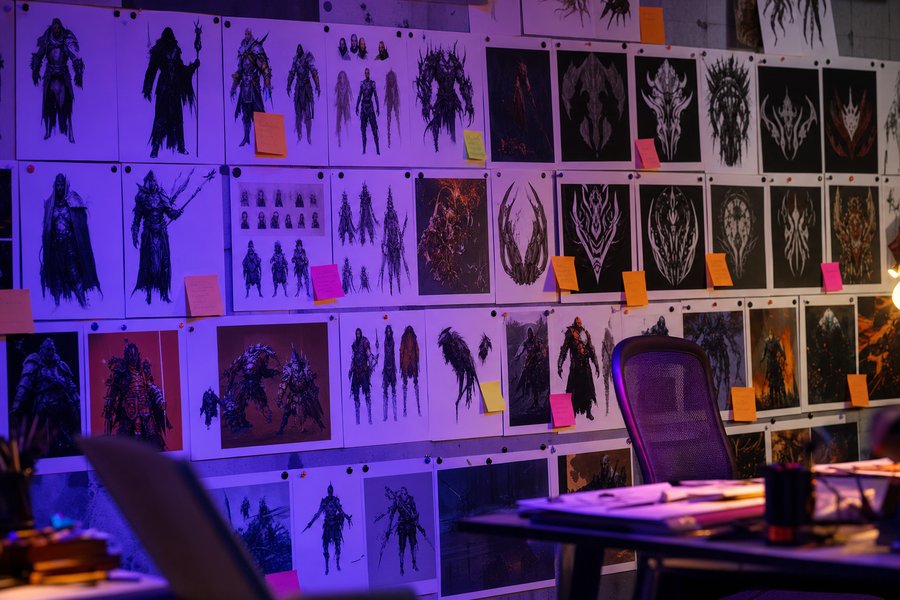
The commercial pattern that matters most to design is acquisition. A small studio earns attention by looking unlike everything else, and gets bought for exactly that reason. Its output is then folded into a much larger aggregated library, where consistency across the catalogue is worth more than a distinctive hand. The recognisable look that made the studio valuable is often the first thing standardised away, which is why house styles in this industry tend to have a shelf life measured in a few years rather than a career.
That is not a complaint about business, it is a description of an incentive. It also explains why the studios worth watching for art direction are usually the independent ones, and why a list of them goes out of date faster than a list of theatre designers does. The stage equivalent would be a scenic studio losing its identity on being absorbed into a larger shop, which happens too, just more slowly and with less money involved.
Awards as an industry signal
Award categories are a decent proxy for what an industry has decided to take seriously. On that measure game design is a much younger field than the stage. The International Gaming Awards have run since the 2000s, and the ninth edition was held at The Savoy in London in 2016, as a curtain-raiser to ICE Totally Gaming. Microgaming took Innovator of the Year there for a VR roulette prototype. It had already won a digital innovation prize the previous September.
More useful for design specifically, the CasinoBeats Game Developer Awards run a Game Design and Art Direction category among roughly nineteen. One heading is modest next to the thirty-odd the stage awards now carry. The direction of travel is the same one the theatre took, though: craft categories arrive once an industry decides the craft is worth naming separately from the product.
The award index holds 2,060 entries across both industries, and the design section covers what the studios are actually making. Reading the two together is the point: a stage craft that took decades to get its own heading, next to a game-industry one still arguing over what counts as design at all.