
Set design, costume and game art: the same job at two distances
Set and costume design for the stage has to convince someone sitting twenty rows back, in a room where they cannot get any closer. Game art has to convince someone holding a phone at arm's length, who can see every pixel. The constraint is inverted and the craft question is identical: how much detail survives at the distance this will be seen from, and what can be thrown away.
When set and costume design entered the record
Set design arrives in the record in the 1968-69 season, fifteen seasons after the awards themselves began. Costume design follows one season later, and lighting design not until 1974-75. Before that the record names productions, performances and direction, and the people building the physical show go unlisted. That gap is worth sitting with, because it took three separate decisions across six years to get all three trades named, rather than one.
The category list grows and splits as it goes. Set design becomes scenic design, then divides across musical and play, so one job carries three different headings across the record. Sound arrives decades in. Projection design appears only once the technology exists to need it. Read as a sequence rather than a snapshot, the list records what the theatre thought was worth naming. That answer changed roughly every fifteen years, which makes the category headings themselves a rough history of the trade's own priorities.
The four crafts split into musical-and-play pairs on their own separate schedules, not together. Scenic design divided first, in 1995-96. Lighting followed thirteen seasons later, in 2008-09, and sound the season after that, in 2009-10. Costume design was last, not dividing until 2015-16 — twenty seasons after scenic had already done it. There is no single moment the record treats as "when design got serious"; each craft got its own heading only when the field judging it had grown large enough to need one.
Game art as set design by another name
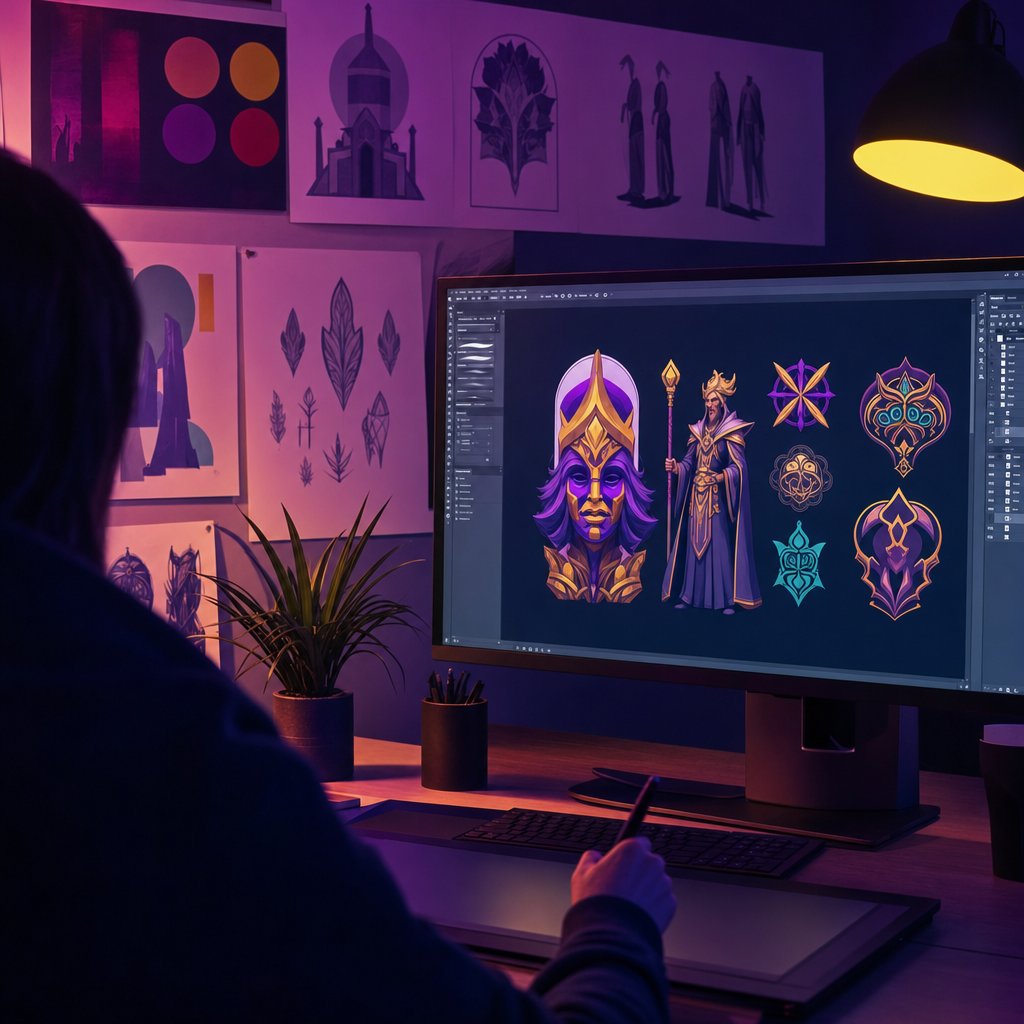
The clearest case for treating game art as set design work by another route is a studio with a house style you can recognise without being told. Peter and Sons, working from Barcelona and Yerevan since 2019, draws by hand in a comic-book register and takes its subjects from folklore. Forty-five titles in, the look is consistent enough to identify at a glance. That is art direction in the sense the stage would recognise, not decoration applied at the end.
The industry's own awards have started to say so. The CasinoBeats Game Developer Awards run a Game Design and Art Direction category, which ELK Studios won in 2023 for Nitropolis 4. One category among roughly nineteen is modest, but it is a heading where there was none, and it is judged on the same question a lighting award is: does the work hold up when you look at it.
Where the two records diverge
Set and costume design on the stage has a seventy-year paper trail naming individual designers season by season. Game art has a handful of years of awards and an industry habit of crediting studios rather than people. That asymmetry is the honest difference between them, and it is not because one craft is younger. It is because one industry started writing names down earlier.
It also means the two records answer different questions well. Ask who designed a specific set in 1988 and the stage record can name the person. Ask the same of a slot symbol sheet from three years ago and the honest answer is often the studio, not an individual — the credit line simply was not built to carry a name yet. That gap will likely close the way the stage's own record closed it, craft by craft, once naming individual designers becomes the industry's own habit rather than an exception.
The full index runs to 57 seasons, the sound section covers what gets scored rather than drawn, and who owns the studios being credited is a separate question with its own answer.